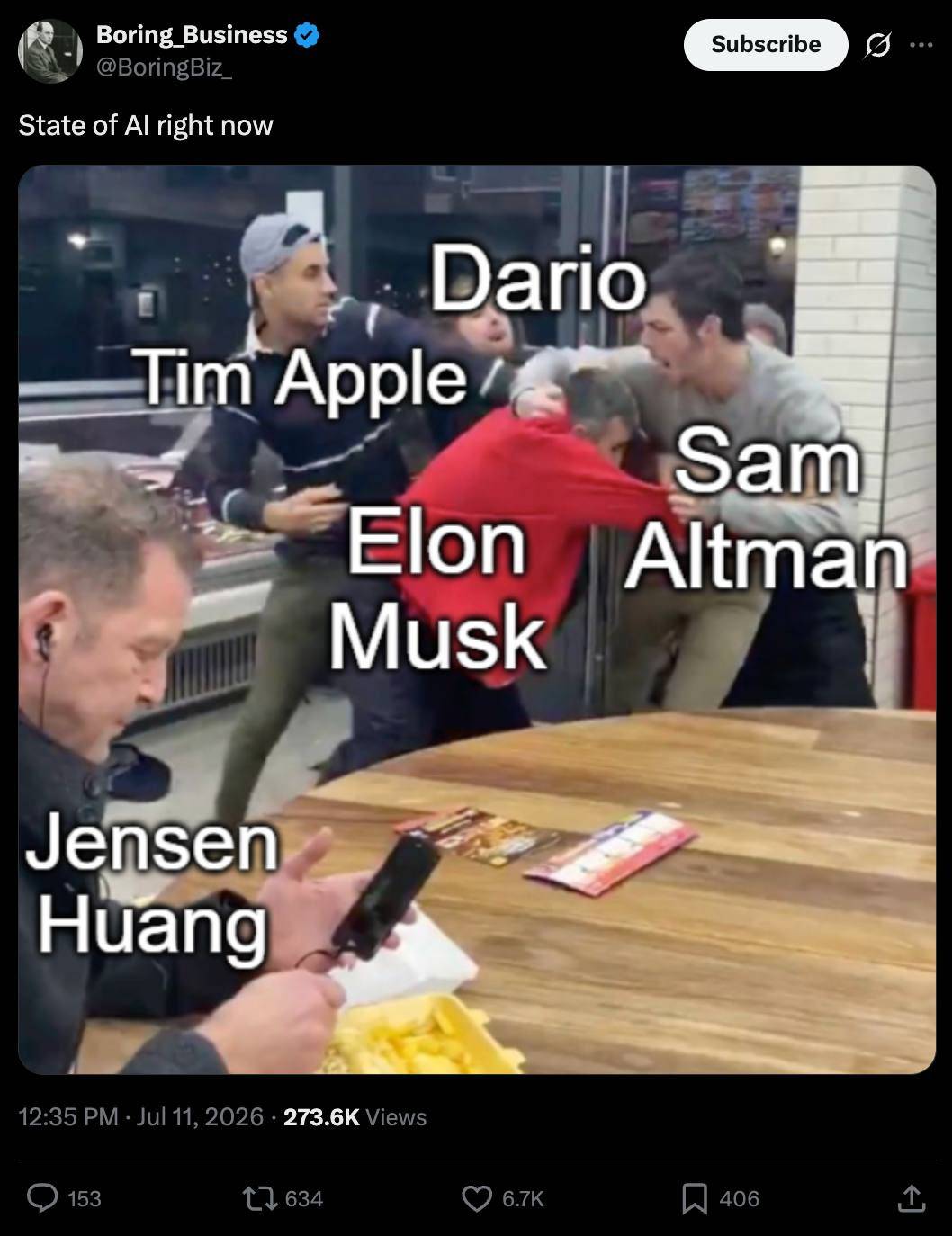
🎭 “It prepares you vastly better for the future to think of models as cartoon characters of arbitrary and growing intelligence living in the cloud than it does to think of them as software or tools.” – roon
Hello Reader,
There’s been lots of releases in July 2026.
First, Anthropic said after Fable 5 was (re)-released, it would go onto the API, and paid subscribers could only use it via API or usage credits (making it pay-as-you-go, instead of all-you-can-eat) after 7 July.
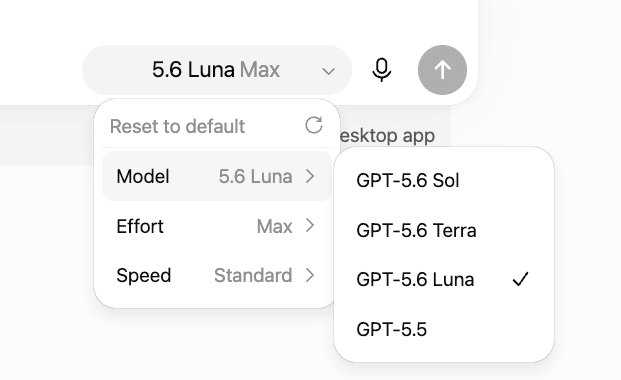
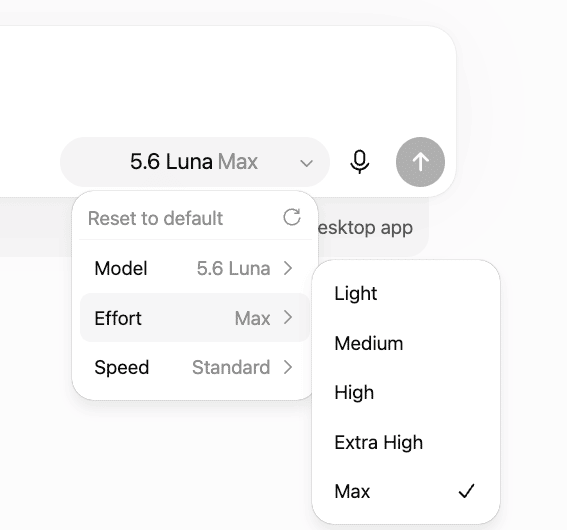
Then, OpenAI released GPT-5.6, with 3 reasoning levels, and your choice of effort :
Fable 5 has been re-added to the subscription plan twice while Anthropic sees cancellations as users migrate to GPT-5.6.
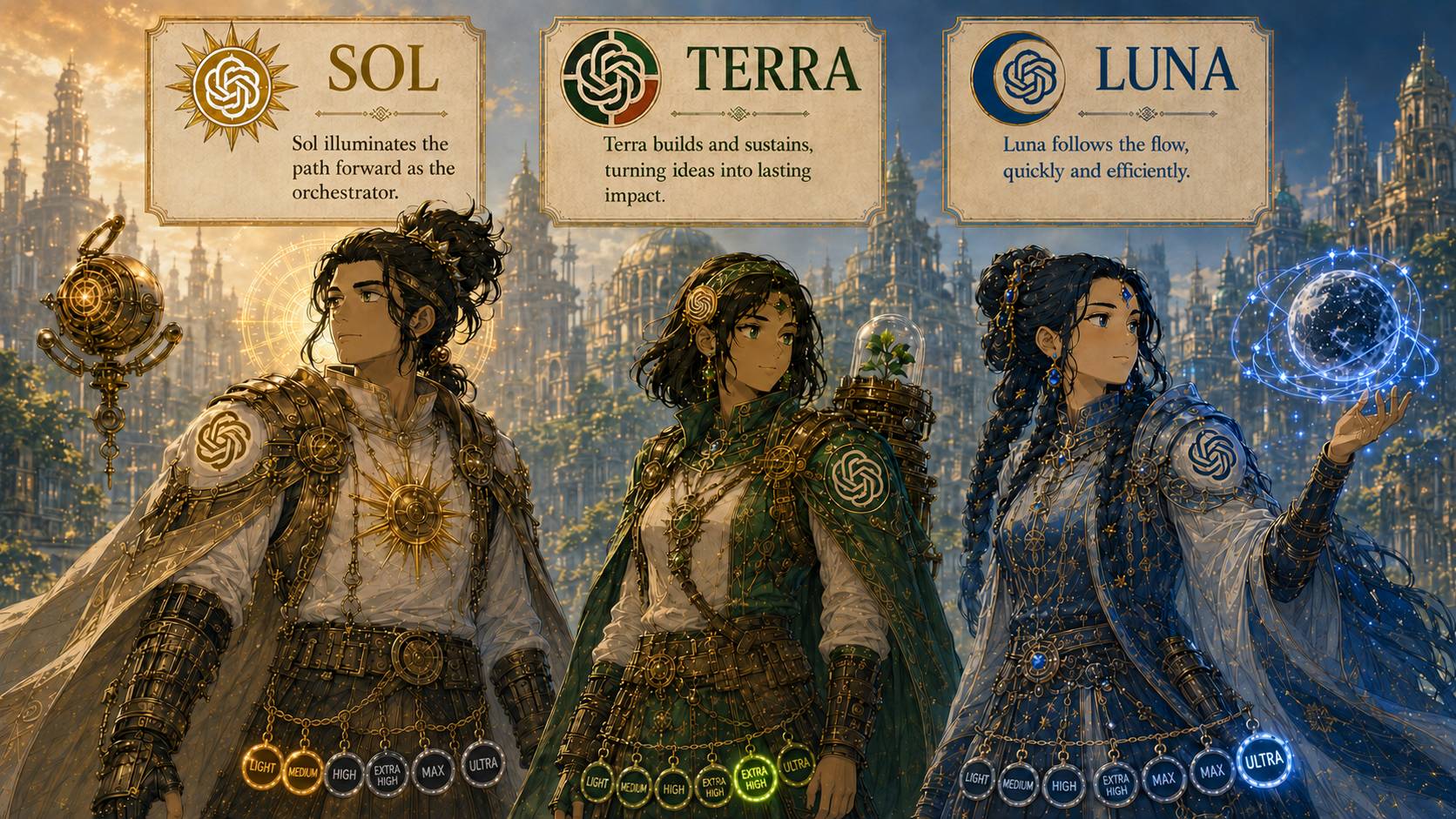
Sol, Terra, and Luna. Which one do you pick? I have a simple answer, because it’s obvious which one gives you the most bang for your buck (or rather, which one gives you the best thinkin for your token)….
Best thinkin for your token: GPT-5.6 Luna Max.
Before I share my reasoning (and quantify its reasoning), let’s review:
☀️ GPT-5.6 Sol is the flagship model. It’s designed for the most demanding work – advanced coding, scientific research, cybersecurity analysis, and complex reasoning.
🌍 GPT-5.6 Terra is the mid-range model, balancing capability, speed, and cost. All-rounder, good at lots of things, not great.
🌙 GPT-5.6 Luna is the fastest and most cost-efficient, intended for low-latency connections where speed is important.
In addition to selecting the model, you can also select the effort and the speed. Fast speed is a 1.5x token cost, while the effort makes a very minor difference to the token cost on Luna, and a huge difference on Sol.
But while the token costs increase with higher effort with Sol, the capabilities don’t. While with Luna, higher effort gets better output, with only minor increase in cost.
This chart compares the scoring of each model on an agentic coding benchmark (vertical axis) vs token cost (horizontal axis).
Notice how Luna Max, Terra High, and Sol Medium all score about the same on this task, but get progressively more expensive.
Be warned: this image only compares agentic coding tasks. If you are using Sol, Terra, and Luna for other things, YMMV (Your Mileage May Vary).
The source linked above from Artificial Analysis also measures other metrics, and your use case may benefit from higher models.
But so far, I like GPT-5.6 Luna Max. It’s giving me a lot of mileage on non-coding tasks. It’s as good at GPT-5.5 at half the token cost. But it is slow.
If I was only running 1 chat thread, I wouldn’t like it, but I often keep multiple plates spinning in the background, and dance between them.
I haven’t done proper evals (it’s only been out a few days, as of this writing, and I’ve been traveling a lot lately, teaching AI training workshops to growing businesses) so I can’t give you more than my vibes.
If you try Luna Max on a few things, and you find it too slow, try turning down the effort, and bumping up to Terra.
My impression so far: Sol is going to be great for complex, multi-turn workflows. If you have an orchestrator agent trained to manage sub-agents, midrange Sol will get you far (with higher effort for multi-hour tasks). Using high effort on Sol will just eat tokens needlessly, unless you know you need it.
Terra is what I really want to use with my OpenClaw and Hermes agents. I just haven’t had the time to switch them over yet (again, I am just recommending based on vibes so far.)
Which one is best for you? Only testing will tell.
Try something from my prompt archive and use parallel prompting to try Sol, Luna, and Terra in multiple tabs. Experiment with different levels of effort, and see how it affects your outputs.
OpenAI also released ChatGPT Work, a program that can manage files on your computer (like Claude Cowork)
Apple sued OpenAI for poaching hardware IP and staff
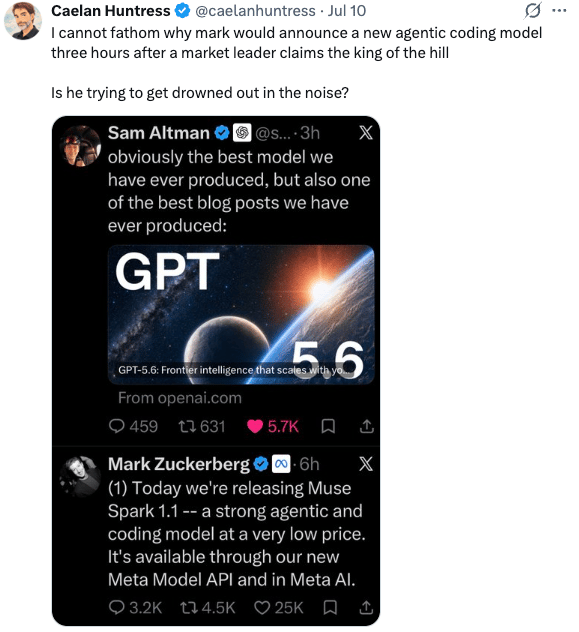
Grok released Grok 4.5 and Meta released Muse Spark 1.1, both agentic coding models
👓 What I’m Reading
The Two Clocks by Zack Shapiro – “A general-purpose technology pays off only when someone redesigns the work around it, and the redesign can run a generation behind the invention.”
The Reverse Information Paradox by Satya Nadella – “A company should be able to use a model without giving up the knowledge that makes it unique.”
AI 2040 (a sequel to AI 2027)- “There is one job the AI companies want to automate more than any other—their own.”
Dead Forest Theory by Venkatesh Rao – “Much of this activity no longer serves the historical function of public discourse: creating common knowledge among strangers. Instead, it functions as a perpetual visibility engine. Attention circulates. Narratives recycle. Audiences become increasingly parasocial. Public performance continues while public life gradually disappears.”
Free Community Event
In 2 days! Webinar for members of the AI Coaching Academy
Friday, July 17 at 1:00 PM GMT+12
AI and the Exponential Age of Abundance
What if we’re underestimating what could go right? As intelligence becomes cheaper, faster, and more accessible, we’re entering an era unlike anything in human history. Just as electricity transformed industry, and the internet transformed communication, AI is transforming intelligence itself. In this webinar, we’ll explore the optimistic case…