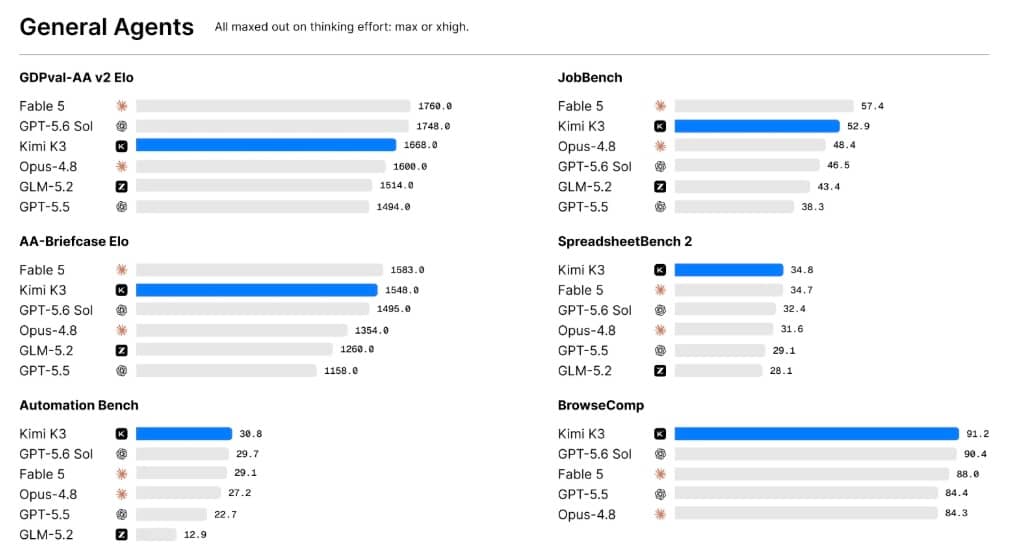
🏆 “Kimi K3 is the best performing model on http://nextjs.org/evals, ahead of Fable, reaching a comparable success rate in less time. This is the first time that an open model is ahead of all proprietary ones for this comprehensive web engineering benchmark.” – Guillermo Rauch
Hello Reader,
The conventional wisdom has been: open-source models are 3-6 months behind frontier models.
If you wanted best-in-class reasoning, you had to pay for your tokens through a Frontier model. You could pay through a subscription (all-you-can-eat) or via an API (pay-as-you-go).
With the release of agent harnesses like OpenClaw and Hermes, you can switch models with a simple slash command. The same agent will hold the same personality, and the same instructions, but between one prompt and another, you could switch from a Frontier model to an Open-Source model.
Open Source Models Make Great Fallbacks
The big advantage I talked about in my webinar comparing Hermes vs OpenClaw (replay here) is that Open Source models can be downloaded and run locally. Your data doesn’t go to the cloud – you can use an open-source model to run an LLM without an internet connection.
When I am running my OpenClaw agents hard, and I hit the limits on my $200/month OpenAI subscription, I can downshift to an Open Source model and keep going.
The tradeoff in reasoning hasn’t been very difficult – I find my cron jobs and heartbeats work fine on open source models, anyways. I’ve only been using Frontier models for direct interface with me, but when my Hermes agent is directing his Paperclip sub-agents, he is instructed to use the cheapest model that gets the job done with high quality.
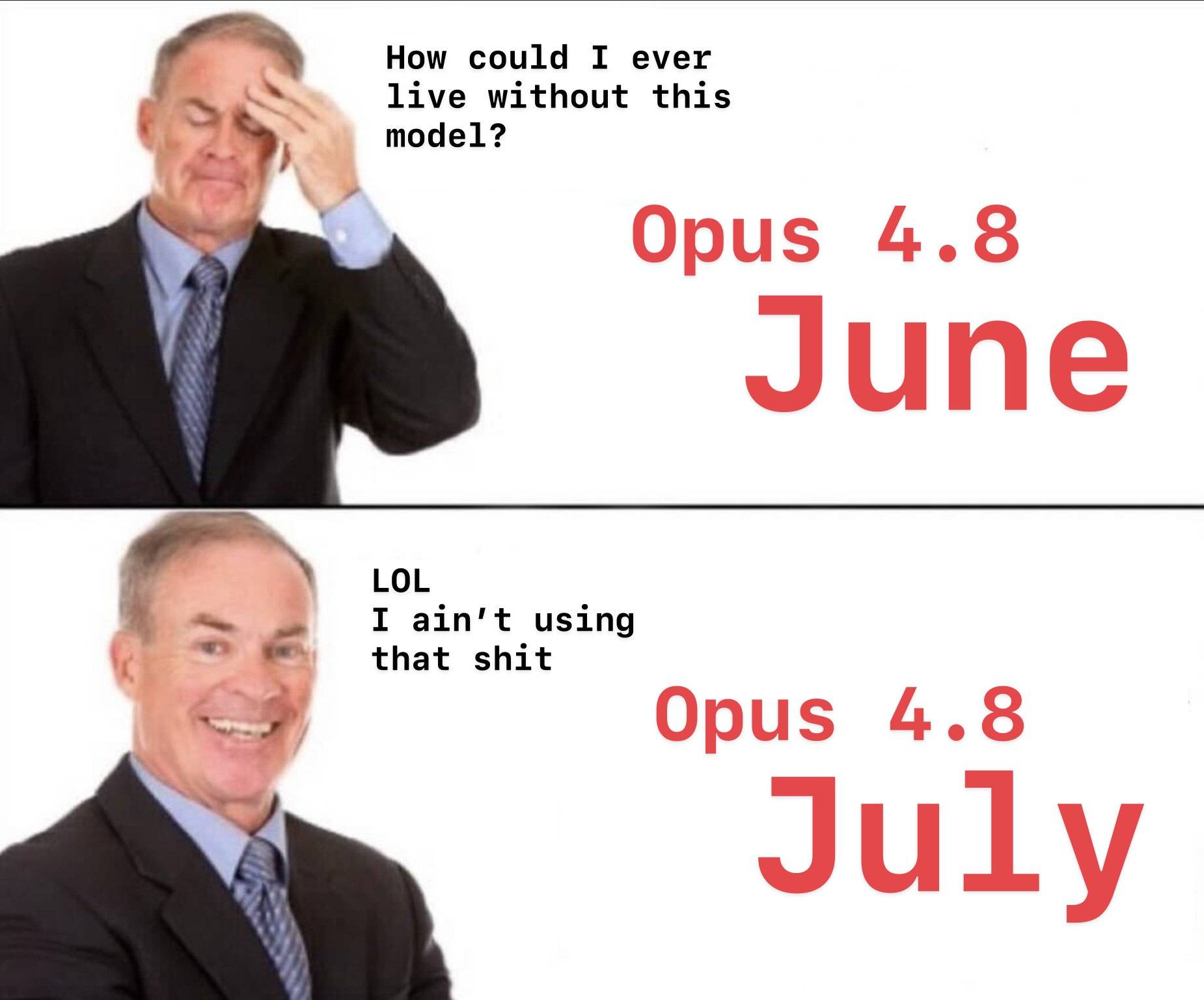
This week, the calculation flipped.
Moonshot AI made an Open Source model with Frontier capabilities. Meet Kimi K3.
As they announced on their blog, Kimi K3 can outperform Fable 5 and GPT-5.6 Sol on some benchmarks, at a fraction of the token cost.
When people talk about unexpected changes shaking things up in the world of AI – this is the kind of change they are predicting.
The economics of the AI model race have fundamentally shifted, and it’s created some really interesting conversations, asking questions like:
Is there financial value in expensive, hosted frontier models, when open source models can outperform them?
Will companies still pay premium for the model, or will the real value move to the agent, workflow, memory, and interface around it?
Do copyright restrictions stifle innovation?
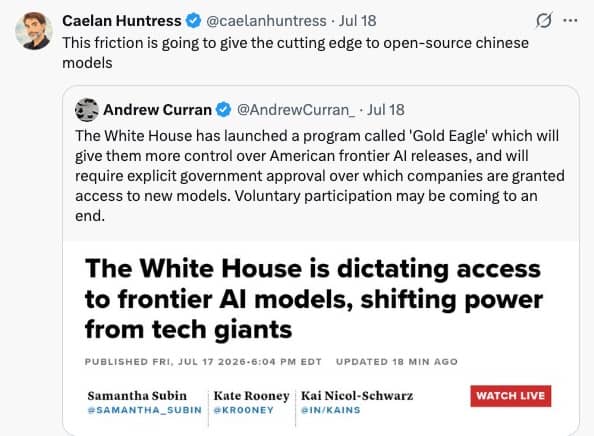
Is China subsidising model development, to defang American dominance in the AI race?
Are there backdoors in Chinese Open Source models that make them less secure, even if hosted locally?
If frontier intelligence can run privately, will local AI become a requirement for legal, medical, financial, and government work?
Does “open source” still count as accessible when the model requires data-centre-scale hardware to run?
Will open models weaken American dominance, or expand the total market for American chips, cloud providers, and agent platforms?
What advantage remains for a closed model if an open model is cheaper, private, customisable, and nearly as capable?
Are we entering a world where the best model is not one permanent choice, but a routing decision made separately for every task?
Please note, as of today, the open weights for Kimi K3 have not been released (scheduled for 27 July), and it is too big to be run on a small laptop. You’d need big hardware to run this locally (at least a terabyte of GPU), which means using Kimi K3 (today) does require API spend.
If you were hoping for ‘cutting edge intelligence at zero cost,’ this is not the announcement you are waiting for.
But, this development does represent a fundamental shift in the economics of AI models. The next big thing: WAICO (see below).
🎥 [REPLAY] AI and the Exponential Age of Abundance
The World Artificial Intelligence Cooperation Organisation (WAICO) was established at the World AI Conference in Shanghai
Thinking Machines released Inkling, an ambitious US-based open-weights model
Canva released Canva Code 2.0, allowing you to vibecode apps with your Canva assets
OpenAI announced GPT-Red, an AI model made for hacking to uncover weaknesses
👓 What I’m Reading
A Framework for Frontier AI and the Dawning of a New Age by Demis Hassabis – “When we look back on this time in the decades to come, I think we will realise we were standing in the foothills of the singularity – nothing less than the dawning of a new age for humanity.”
Career Advice in the Age of AI by Phil Chen – “The most important skills will be the ones related to problem selection and resource allocation.”
In this free webinar, you’ll learn the fundamentals of Answer Engine Optimisation (AEO)—the next evolution of digital visibility. Instead of trying to rank higher in search engines, you’ll discover how to structure your expertise so AI systems recommend you in responses to LLM prompts. To get recommended by LLMs, you need to structure your…