🧐 “The best way to drive AI adoption is by marrying domain knowledge with foundational AI training. Generalist skills, creativity, and technical integration are more critical than deep specialization in today’s AI-driven world.” Bhavesh Dayalji
Hello Reader,
I’ve been writing content on the Internet for a long time, and I must confess – I’m vain about what I publish.
I have always produced a large volume of content. I was a marketing automation expert for a decade, so I can make a lot. I like making a lot. But the absolute last thing I want is for someone to read what I’ve written and scoff, ‘This is AI slop.’
image prompt: “turning my back on AI slop for good writing”
I don’t publish one-shot prompt responses under my own name, on social media, or in my newsletter. (My SEO blogs, created by my OpenClaw agent – I don’t mind that slop.) When I publish something as myself, I want the voice to be unmistakably human.
All my newsletters are written by hand, because I like writing newsletters. But event descriptions? Webinar blurbs? SEO content? Not so much.
Even when I use AI to plan and produce the early stages of my content, as a writer, my creative taste is essential to the finished product.
Here’s the process I currently use, when I collaborate with AI on producing content that doesn’t start with a manual first draft:
Build Context – Ask AI to ‘tell me about’ a few relevant topics, one at a time. Give links and resources, one for each prompt, to fill the context window with relevant content.
Define Outcome – Tell AI what I want to create, ask for an outline
Produce Content – Ask AI to create the first draft
Open In Canvas – human editing, light or heavy
Ask For Feedback – copy/paste into a fresh thread, ask a different LLM to evaluate the draft, as an editor
Give Feedback – paste those notes into the Canvas side-panel in the original session
Final Draft – collaborate on final wording
Copy/Paste – one-click copy, paste into publication
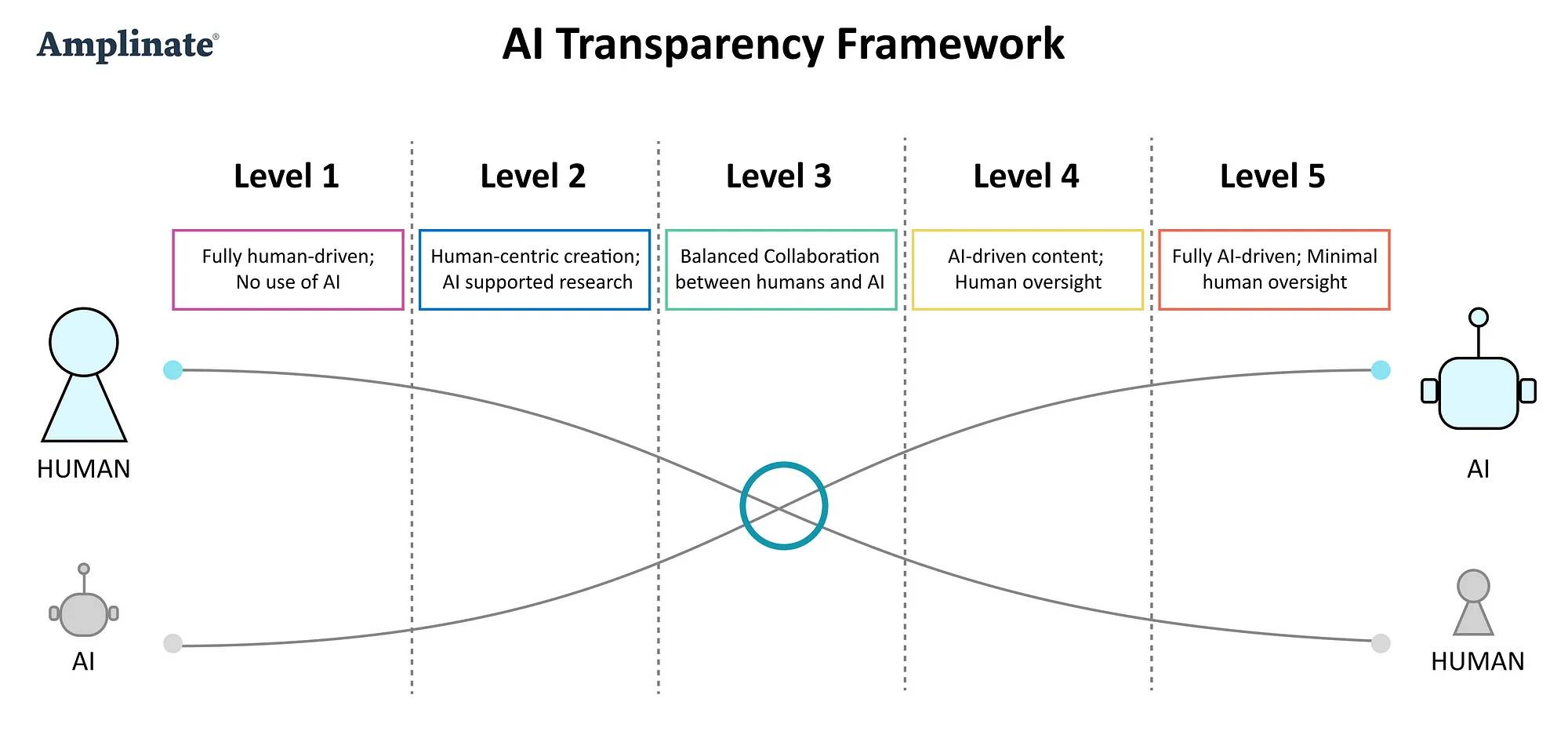
The two big variables I modulate to move between these levels are:
Who starts, me or AI
How much do I edit
If you want to have AI assist you in producing good content, you might find this process useful. Some things can be Level 5 (such as my bot’s recent blog posts on AI Statistics in New Zealand 2026, or AI Governance in NZ) while others should be level 1 (personal emails, DMs). You may find newsletters and social posts can be Level 2, 3, or 4. It’s a matter of style.
This newsletter is Level 1 – written entirely by hand. Writing is a skill that can go sour (use it or lose it).
This is why I journal every day. If I can keep mastery of my craft, then I can be the most effective human operator of AI where it intersects with my chosen field of expertise.
As Bhavesh said above, the intersection of domain knowledge with AI knowledge – that’s where we should be aiming right now.